Ski vs Snowboard: Which Should You Choose?

The Question We Get Asked More Than Any Other
You have booked the trip. You have sorted the flights, the chalet, the lift passes. Now someone - usually over dinner, usually about three weeks before departure - drops the question that derails the whole table: should I ski or snowboard?
We have been asked this in alpine huts, in rental shops, in airport queues and once, memorably, via a panicked voice note at midnight. The honest answer is that it depends - but not on the vague, fence-sitting variables you might expect. It depends on very specific things: your age, your pain threshold for early failure, whether you have children in tow, and what kind of skiing life you want a decade from now. We are going to give you real answers, including some that might surprise you.
Day One on Skis vs Day One on a Board
Skiing wins the first day. Full stop. The reason is biomechanical: skis point forward, your body points forward, and the movement - sliding, steering, stopping - maps fairly naturally onto instincts you already have. By the end of a proper half-day ski lesson, most beginners can shuffle down a nursery slope without catastrophe. That feels like progress. Snowboarding does not do this.
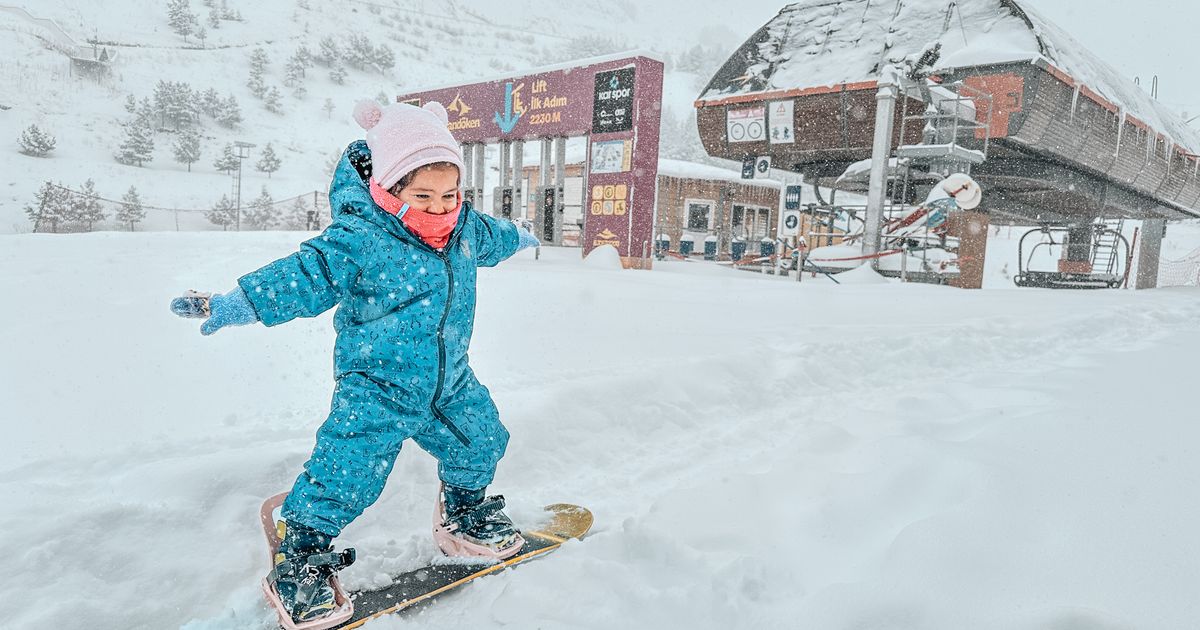
Snowboarding does something quite different: it puts you sideways on a board with both feet locked in, removes your ability to break your fall with your hands (you will learn this the hard way), and then invites you to hurtle downhill. Day one on a snowboard is, for most people, a series of controlled - and uncontrolled - falls. Wrists take a beating. Coccyxes take a beating. Dignity takes the worst beating of all.
There is a piece of equipment we recommend strongly for beginner snowboarders that rental shops sometimes forget to mention: wrist guards. Buy them before you go. The instinct to catch yourself with an outstretched hand is almost impossible to override, and a broken wrist on day two will ruin rather more than just your ski holiday. Our equipment guide covers the key kit decisions for both disciplines in more depth.
If you are travelling with children under twelve, or if you have a group with very mixed confidence levels, ski. The learning curve is gentler and the chances of everyone managing a blue run by day three are considerably higher.
The Day Three Crossover - and Why It Changes Everything
Here is the part the ski instructors do not always mention: around day three, something clicks for snowboarders. The body stops fighting the board. Edge control starts to feel intuitive. Turns become flowing rather than terrifying. And from that point, snowboarders often progress faster than skiers at an equivalent stage.
The reason is that snowboarding, once the fundamentals are internalised, involves a single platform with one edge system. Advanced skiing, by contrast, requires you to manage two independent skis, complex weight transfers, and precise pole planting across an enormous variety of terrain. The ceiling for technical skiing is extraordinarily high - which is partly what makes it so absorbing as a lifetime pursuit, and partly what makes it humbling every single season even for experienced riders.
So the trajectory looks roughly like this: skiers have an easier first two days and a harder path to mastery; snowboarders suffer more at the start but often find themselves riding blues and reds confidently by the end of their first week. Neither path is wrong. They are just different.
This is also why we always say: book proper lessons. Not "my partner will teach me" - that is how relationships and coccyxes get broken. A qualified instructor, whether you are on skis or a board, compresses weeks of fumbling into days of actual progress. If you are heading to the Alps for the first time, our guide to skiing in France has good notes on lesson booking and where ski schools sit within the resort structure.
Injury Profiles - Knowing What You Are Signing Up For
We are not here to frighten you, but you should know the honest injury picture for each discipline, because it genuinely influences who should choose what.
Skiers are more vulnerable to knee injuries - specifically ACL and MCL tears. The mechanics of a ski fall, where one ski releases and the other catches, create rotational forces at the knee that the body is not well designed to absorb. Skier's thumb (a torn ulnar collateral ligament from planting a pole in a fall) is also common. Knee injuries tend to be more serious and require longer recovery times than most snowboard injuries.
Snowboarders, as noted above, suffer more wrist injuries from impact falls, and shoulder injuries from catching an edge at speed. Head impacts are statistically more common for riders, which is one reason we always advocate helmets for everyone regardless of ability - but even more emphatically for snowboarders. Ankle injuries occur too, particularly when boots are not fitted or buckled correctly at the start of the day.
Older beginners - and by this we mean anyone over about forty-five - should factor this in carefully. ACL reconstruction at fifty is a longer, harder road than at twenty-five. If joint health is a concern, or if you have existing knee problems, snowboarding's injury profile may actually be more manageable. Conversely, if your wrists are already problematic - previous fractures, arthritis - skiing might be kinder on the body overall.
Terrain, Conditions, and the Things That Actually Matter Day to Day
The piste is only part of the picture. How each discipline handles different snow and terrain conditions has real implications for the kind of skiing life you will lead.
Powder
Powder skiing on a snowboard is, by many accounts, the most purely joyful thing you can do on a mountain. The board floats naturally; the technique adapts intuitively; even intermediate riders can experience deep powder in a way that takes skiers years of dedicated technique to unlock. If powder is your dream - if you have watched footage of riders disappearing into waist-deep snow and felt your heart rate climb - then snowboarding will get you there sooner. Our Hokkaido guide covers what that powder experience actually feels like, and why Japan has become a pilgrimage for snowboarders worldwide.
Flat Sections and Cat Tracks
This is where snowboarding extracts its tax. Flat traverses, long cat tracks, and run-outs that lose elevation slowly are genuinely miserable on a board. You will unclip your back foot and skate, or sit down and slide, or simply stop and wait for a passing skier to tow you. Skiers glide through these sections with minimal effort. If your target resort has a lot of flat linking sections - common in some of the larger French valley-floor ski areas - this is worth factoring in before you commit to a board.
Drag Lifts
Button lifts and T-bars are harder on a snowboard. You can do them, but they require technique and, on your first few attempts, a certain tolerance for embarrassment. Most modern resorts have moved heavily toward chairlifts and gondolas, but if you are heading somewhere with predominantly old-school lift infrastructure, expect this to add friction to your day in ways that skiers simply do not experience.
Ice and Variable Conditions
On hard, icy pistes - common in late season or after a cold clear spell - skis give you more precise edge control and more options for managing your line. Experienced skiers can pick their way across bulletproof hardpack with reasonable confidence. Ice on a snowboard punishes any error in edge angle sharply and provides very little margin for error. This is a meaningful point in skiing's favour for spring conditions, which we cover in detail in our best spring skiing in Europe guide.
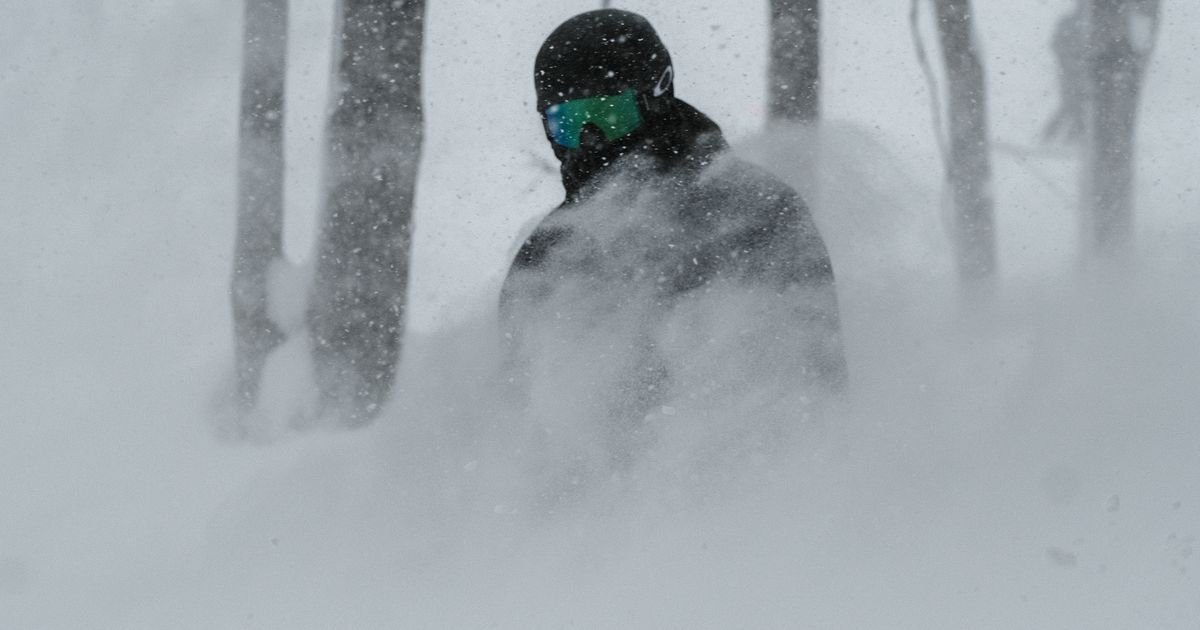
Photo by Shashank Brahmavar on Pexels
Gear, Cost, and the Rental Shop Reality
From a pure cost perspective, the gap between skiing and snowboarding has narrowed considerably. Rental packages for both disciplines are broadly similar in price across most Alpine resorts - typically 30 to 50 euros per day for a beginner set. If you are buying rather than renting, entry-level ski packages (skis, boots, bindings) and snowboard packages (board, bindings, boots) sit in similar price brackets, though high-performance ski boots are one of the most expensive individual items in either sport.
The one area where skiers spend more is poles - a minor cost - and the ongoing expense of boot fitting and alignment. Serious skiers often own their own boots long before they own their own skis, because a well-fitted boot is transformative and rental boots are frequently terrible. The same is true for snowboard boots, which benefit enormously from being your own rather than the 47th pair to be worn this season by someone whose feet were not quite the same shape as yours.
For both disciplines, we strongly recommend visiting a proper specialist retailer before your trip to be measured and fitted, even if you ultimately rent on the mountain. Many alpine resorts now have excellent ski and snowboard shops offering premium gear rental by appointment - worth seeking out rather than grabbing the first pair off the wall at the base lodge.
Culture, Vibe, and the Honest Social Reality
We should address this directly because people do think about it, even if they feel slightly embarrassed to admit it: skiing and snowboarding carry distinct cultural identities, and depending on where you ski and who you ski with, this can matter to your experience.
Snowboarding emerged as a counter-cultural sport in the 1980s and retains some of that DNA - particularly in terrain parks, where the community skews younger, the music is louder, and the aesthetic leans heavily toward streetwear brands. The park scene has its own language, its own hierarchy of respect, and its own genuinely impressive technical standard. If you are drawn to freestyle riding, tricks, and that whole world, snowboarding is almost certainly your discipline.
Skiing's culture is broader and harder to pin down. It encompasses everything from the white-tablecloth après-ski of Courchevel to the mogul obsessives of Val d'Isère to the freeskiing community chasing untouched lines in the backcountry. Modern skiing has shed much of its stuffy reputation - the park culture is thriving, twin-tip skis have opened up a whole freestyle vocabulary, and the divide between skiers and boarders that felt pronounced in the 1990s has largely dissolved at most resorts.
At most mountains today, the hill is genuinely integrated. You will find skiers and boarders on the same lines, in the same lift queues, in the same patrol teams. The tribalism is mostly historical at this point, and the sport is better for it.
Our Recommendation by Persona
Enough nuance. Here is what we actually think you should do, based on who you are.
Families with young children
Ski. The learning curve on day one is far more manageable for children who need to see quick progress to stay engaged, and managing a group of mixed-ability beginners is much easier when everyone is pointing in the same direction. Most ski schools run dedicated children's programmes specifically designed around skis. You can revisit the snowboard question when the kids are teenagers and asking for it themselves - and they will.
Older beginners (40 and above)
Generally ski, with one honest caveat. If your knees are already vulnerable, discuss this with a doctor before committing - the ACL risk is real, and the recovery at fifty is more significant than at twenty-five. If knee health is a serious concern, snowboarding's wrist-heavy injury profile might paradoxically be easier to manage. But for most people in this age group, skiing's gentler first-week curve and the ability to get around the mountain independently by day three will be more important than long-term progression speed. Austria in particular has some of the most experienced and patient instructors in Europe for nervous adult beginners - our Austria guide is a good starting point for planning that first trip.
Younger beginners who want to progress quickly
Either, honestly - but if you have the tolerance for two painful days, snowboarding's progression curve after that initial hump is genuinely faster and the plateau comes later. If you are drawn to freestyle, parks, and powder, the boarding culture around those pursuits is rich and rewarding. Consider where you want to be in five years, not just at the end of week one.
Off-piste dreamers and backcountry aspirants
Both disciplines have extraordinary off-piste traditions, and both have a passionate guiding and safety culture around them. In deep powder, a snowboard has a natural advantage in feel and accessibility. In variable backcountry terrain - particularly on ski touring routes, where you skin uphill and ski down - skis with touring bindings are dramatically more practical. If your long-term ambition is ski touring and alpinism, start on skis. If it is powder freeriding, both are viable and the choice is genuinely personal. Our Switzerland guide touches on the off-piste culture in Verbier and the Arlberg that tends to produce passionate riders of both types.
Terrain park and freestyle riders
Snowboard, if you are drawn to that world instinctively. But be aware that modern twin-tip skiing has made park skiing genuinely thrilling, and many of the biggest names in freestyle skiing in the past decade have been on skis rather than boards. Do not assume the park is the board's exclusive territory. It is not, and the crossover between disciplines in that world is growing every season.
The Honest Bottom Line
We will say it plainly: for most adult beginners, especially those travelling with groups or families, skiing is the safer first choice. The first week is more forgiving, the logistics on the mountain are simpler, and you will see the scenery rather than the inside of your own goggles while you try to work out which edge you are supposed to be on.
But if you are young, stubborn, drawn to the culture, or simply want the powder experience sooner rather than later - snowboard. Embrace the two bad days as the price of admission. Wear the wrist guards. Book the lesson anyway. They are worth every bruise.
What neither of us should do is let the choice paralyse the planning. The gap between an intermediate skier and an intermediate snowboarder, on a beautiful bluebird day in the Alps or the Rockies, is smaller than the social media debate would have you believe. Both of them are having the time of their lives. The mountain does not particularly care what is strapped to your feet. Get on it. Everything else is secondary.
Hero image: Photo by Florian Rauchberger on Unsplash
Ready to Plan Your Ski Trip?
Find the best deals on ski hotels, lessons, transfers, and lift passes.