Skiing in Germany
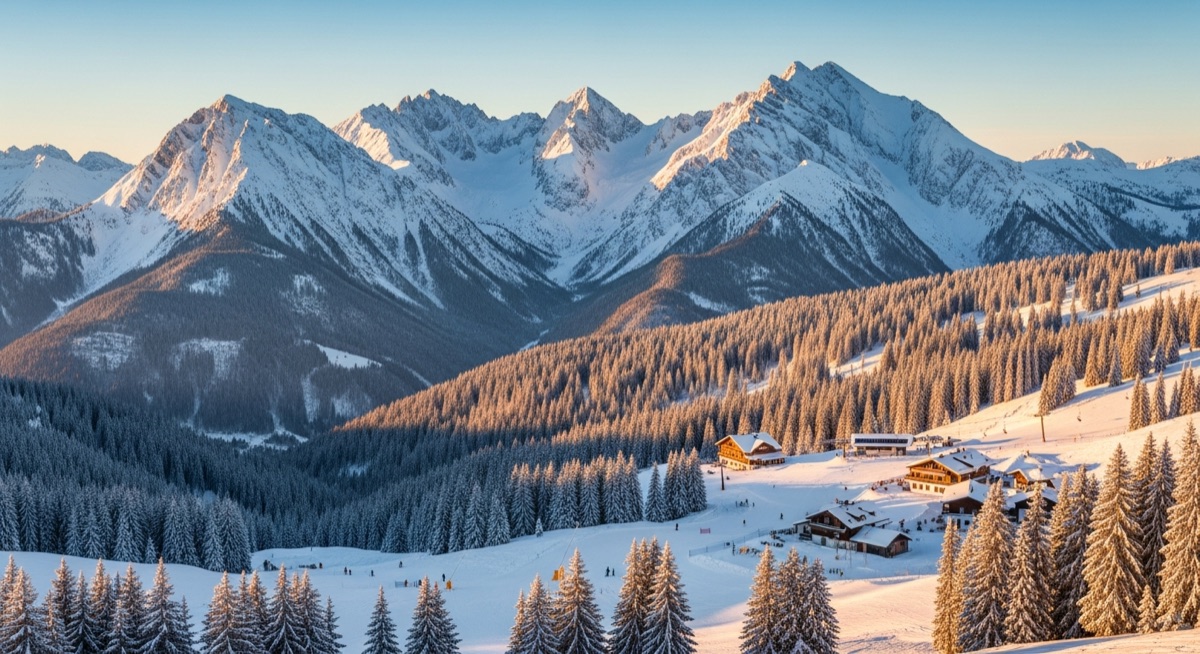
Germany's skiing is concentrated in the Bavarian Alps, with Garmisch-Partenkirchen as the flagship resort. While smaller in scale than its neighbours, Germany offers excellent value, family-friendly resorts, and easy access from major cities.
Where to ski in Germany
We will say it upfront: Germany is not Austria. The mountains are lower, the ski areas are smaller, and you will not find the mega-linked systems that the Tyrol and Valais offer. What Germany gives you instead is something different and, in its own way, equally compelling - genuine value, authentic Bavarian culture, family-friendly terrain, and a complete absence of the pretension that can creep into more famous Alpine resorts. We have skied here on weekday trips from Munich and on dedicated week-long holidays, and both have been rewarding.
The German Alps sit along the Bavarian border with Austria, with the Zugspitze (2,962m) as the highest peak. Most ski areas top out between 1,500m and 2,000m, which means snowmaking is essential and the season is weather-dependent. But when the snow is good, the skiing is genuinely enjoyable - well-groomed pistes, short lift queues, and mountain huts serving Kaiserschmarrn and Weissbier at prices that would make a Swiss resort blush. Check our layering guide - temperatures can vary dramatically at these lower altitudes.
The Best Ski Resorts in Germany
1. Garmisch-Classic - Germany's Flagship Resort
Garmisch-Partenkirchen hosted the 1936 Winter Olympics and remains Germany's most complete ski destination. The Classic ski area offers 40km of piste up to 2,047m, with a vertical drop of 1,320m - serious numbers by German standards. The Kandahar downhill course, still used for World Cup races, is the centrepiece - a steep, technical descent that will test advanced skiers and terrify everyone else. The Zugspitze glacier (Germany's highest point at 2,962m) is a separate ski area accessible by a spectacular cable car, offering guaranteed snow and extraordinary views.
The town of Garmisch-Partenkirchen itself is one of the most attractive in the Bavarian Alps - painted facades, narrow streets, a genuine year-round community that does not depend entirely on skiing. The Partnachklamm gorge, a short walk from town, is stunning in winter with frozen waterfalls lining the narrow canyon walls.
Our favourite runs: The Kandahar for the World Cup thrill, the long red run from Osterfelderkopf through the trees, the Zugspitze glacier for snow-sure cruising.
Best for: All abilities. The combination of challenging World Cup terrain and gentle intermediate slopes makes Garmisch work for everyone.
Practical tip: Buy the combined Classic + Zugspitze pass for the full experience. The train from Munich takes 80 minutes and drops you in the town centre.
2. Fellhorn/Kanzelwand - The Allgäu's Best Skiing
The Fellhorn/Kanzelwand area above Oberstdorf offers 36km of piste up to 1,965m, with a cross-border connection to Kleinwalsertal in Austria. The terrain is predominantly intermediate - wide, open runs above the treeline with panoramic views across the Allgäu Alps. The Fellhorn summit ridge walk (accessible by lift) is spectacular even for non-skiers, and the north-facing runs off the Kanzelwand side hold snow well into spring.
Oberstdorf itself is a charming town with a strong après-ski and cross-country tradition - it hosted the Nordic World Championships and the Vierschanzentournee ski jumping opens here every year at the end of December. The lift pass is good value.
Our favourite runs: The Kanzelwand panorama run on the Austrian side, the Fellhorn summit ridge traverse, the north-facing slopes in fresh snow.
Best for: Intermediates and families. Exceptional value, especially with the cross-border connection to Kleinwalsertal.
Practical tip: The Nebelhorn cable car next door (separate lift pass) takes you to 2,224m - the highest lift in the Allgäu. Worth a day trip for the views.
3. Sudelfeld - The Local's Mountain
Sudelfeld is one of the largest connected ski areas in Germany (13 lifts) and sits just an hour from Munich. At 31.5km of piste, it is modest by Alpine standards, but the terrain is varied - gentle nursery slopes at the base, consistent intermediate runs mid-mountain, and a few genuine steeps off the Waldkopf summit. The atmosphere is unpretentious and local. On weekdays outside school holidays, you will have the mountain largely to yourself.
The resort invested heavily in new lifts and snowmaking in recent years, and it shows. The Sudelfeldkopf 8-seater chair replaced the old drag lifts and opened up the best terrain on the mountain. The mountain huts serve outstanding Bavarian food - a Leberkäse-Semmel (a warm meatloaf roll) is the classic order.
Our favourite runs: The Waldkopf descent for the steepest terrain, the long blue cruiser from Sudelfeldkopf to the base, the tree runs after fresh snowfall.
Best for: Munich day-trippers, families, and beginners. Excellent value.
Practical tip: Arrive early on weekends - the car park fills by 10am when Munich turns out in force. Weekdays are blissfully quiet.
4. Balderschwang - Germany's Snowiest Village
Balderschwang holds the unofficial record for the most snowfall of any village in Germany. Sitting at 1,044m in a high valley near the Austrian border, it catches weather systems that other Allgäu resorts miss. The ski area is modest (around 40km, 12 lifts) but well laid out for families and intermediates, with gentle terrain, excellent grooming, and lift passes that are good value.
The village itself has just a handful of hotels and guesthouses. There are no nightclubs, no designer boutiques, no crowds. What there is: silence, snow, and some of the best cross-country skiing in Bavaria on the trails through the Balderschwang valley.
Our favourite runs: The Riedberger Horn descent for views and consistent pitch, the gentle nursery area for children, the valley cross-country loop at sunset.
Best for: Families with young children, beginners, and anyone who wants a quiet, snow-sure, budget-friendly ski holiday.
Practical tip: The road into Balderschwang can close in heavy snowfall. Check conditions before driving and carry chains.
5. Brauneck - Munich's Closest Serious Skiing
Brauneck sits above Lenggries, just 60km from Munich, making it the closest resort to the city that offers genuine mountain skiing. The gondola from the valley floor reaches 1,540m, and around 31km of piste spread across several sectors served by 15 lifts. The terrain is predominantly intermediate with a few steeper pitches in the Garland area.
The real draw is accessibility. You can be on the slopes by 9:30am from central Munich, ski until 4pm, and be back in the city for dinner. The mountain huts on Brauneck are excellent - the Stie-Alm in particular has a sun terrace, good beer and the kind of relaxed atmosphere that makes you forget you are barely an hour from a major European city.
Our favourite runs: The Garland sector for the steepest terrain, the long run from the summit to Lenggries, the Stie-Alm terrace at lunchtime.
Best for: Munich residents wanting a day on the snow. Also good for beginners and intermediates on a budget.
Practical tip: Take the BRB (formerly BOB) train from Munich Hauptbahnhof to Lenggries - it runs hourly and drops you a short bus ride from the gondola.
6. Feldberg - Skiing in the Black Forest
Feldberg proves that German skiing is not confined to Bavaria. The Black Forest's highest peak (1,493m) hosts a surprisingly complete ski area with 28km of piste and 14 lifts. The terrain is gentle and well-suited to beginners and intermediates. What makes Feldberg special is the setting - the Black Forest in winter, with snow-covered fir trees stretching to the horizon, has a fairy-tale quality that the Alps sometimes lack.
The resort is easily accessible from Freiburg, Basel and Stuttgart, making it a realistic day-trip option for a large population base. The cross-country trails through the Black Forest are outstanding, and the town of Feldberg has a quiet charm that grows on you.
Our favourite runs: The Seebuck descent for the best views, the Grafenmatt sector for gentle intermediate terrain, the cross-country loop through the forest.
Best for: Beginners, families, and anyone wanting a ski experience that feels completely different from the Alps.
Practical tip: Public transport from Freiburg makes this an easy day trip. The Black Forest ham and kirsch cake after skiing are non-negotiable.
7. Skiliftkarussell Winterberg - Northern Germany's Ski Hub
Winterberg is proof that you do not need the Alps to go skiing. Sitting in the Sauerland hills of North Rhine-Westphalia at just 813m summit altitude, it nonetheless packs 27.5km of piste and 25 lifts into a compact area. This is where Cologne, Dusseldorf and the Ruhr Valley go to ski, and on a busy weekend the atmosphere is more festival than resort.
The terrain is entirely beginner and intermediate, with excellent snowmaking ensuring coverage even when natural snow is scarce. The night skiing here is popular, and the après scene - driven by the proximity of several million people - is surprisingly lively.
Our favourite runs: The Kappe descent for the longest run, the floodlit evening sessions, the gentle beginner area for first-timers.
Best for: Beginners and families from northern Germany. Also a fun day or weekend trip for anyone wanting to ski without the long drive south.
Practical tip: Avoid Saturdays if possible - the car parks fill early and the slopes get crowded. Friday evening night skiing is a great alternative.
When to Go
The German ski season is weather-dependent and shorter than in the high Alps, typically running from mid-December to late March. The best snow conditions are usually in January and February. Snow reliability varies significantly - Balderschwang and Garmisch (with the Zugspitze glacier) are the safest bets. The Bavarian school holidays (mid-February) bring crowds to all resorts - avoid this week if possible. For the best experience, aim for weekday skiing in January or early March, when slopes are quiet and lift queues non-existent. Prepare for variable conditions with our ski fitness guide.
Getting There
Munich is the gateway to Bavarian skiing, with excellent train connections to Garmisch-Partenkirchen (80 min), Oberstdorf (2h) and Lenggries (1h). Munich airport is well-connected internationally. For the Black Forest, fly into Basel-Mulhouse or Stuttgart. The German rail network (DB) is affordable and efficient, and Bayern-Ticket day passes give unlimited regional train travel for small groups at excellent value. Driving is straightforward on the well-maintained Autobahn network. For Winterberg, Cologne and Dusseldorf airports are closest. Consider combining a German ski trip with a day or two across the border in Austrian Tyrol - Innsbruck is just 90 minutes from Garmisch. Check our ski insurance guide before you go.
Germany Ski Regions Map
Explore ski areas across Germany
Ski Regions in Germany
Explore ski areas in Germany
Bavaria
Bavaria is a ski destination in Germany, part of The Alps region, with 117 ski resorts to explore. The skiing spans elevations from 281m to 2,628m, giving a vertical range of 2,347m. Across the area there are 522km of prepared pistes. There are 1,122 runs in total - 590 easy, 418 intermediate, 88 advanced - catering to all ability levels. 522 ski lifts serve the slopes, including 44 gondolas and 68 chairlifts. Notable resorts in the area include Skigebiet Garmisch-Classic, Skigebiet Fellhorn/Kanzelwand, Sudelfeld - Bayrischzell and Balderschwang – Hochschelpen/Riedberger Horn. The ski season typically runs from December to March. A daily adult lift pass costs around €48 on average.
Baden-Württemberg
Baden-Württemberg is a ski destination in Germany, part of The Alps region, with 49 ski resorts to explore. The skiing spans elevations from 524m to 1,446m, giving a vertical range of 922m. Across the area there are 132km of prepared pistes. There are 360 runs in total - 226 easy, 100 intermediate, 28 advanced - catering to all ability levels. 143 ski lifts serve the slopes, including 2 gondolas and 5 chairlifts. Notable resorts in the area include Feldberg, Münstertal-Wieden, Muggenbrunn and Haldenköpfle. The ski season typically runs from December to March. A daily adult lift pass costs around €46 on average.
North Rhine-Westphalia
North Rhine-Westphalia is a ski destination in Germany, part of The Alps region, with 15 ski resorts to explore. The skiing spans elevations from 404m to 813m, giving a vertical range of 409m. Across the area there are 50km of prepared pistes. There are 207 runs in total - 122 easy, 70 intermediate, 12 advanced - catering to all ability levels. 72 ski lifts serve the slopes, including 16 chairlifts. Notable resorts in the area include Skiliftkarussell Winterberg, Neuastenberg Postwiese, Skiliftkarussell Altastenberg and Wildewiese. The ski season typically runs from December to March. A daily adult lift pass costs around €52 on average.
Saxony
Saxony is a ski destination in Germany, part of The Alps region, with 15 ski resorts to explore. The skiing spans elevations from 283m to 1,211m, giving a vertical range of 928m. Across the area there are 30km of prepared pistes. There are 87 runs in total - 57 easy, 19 intermediate, 5 advanced - catering to all ability levels. 57 ski lifts serve the slopes, including 1 gondola and 3 chairlifts. Notable resorts in the area include Skigebiet Oberwiesenthal, Holzhau, Skigebiet Lausche and Schöneck. The ski season typically runs from December to March. A daily adult lift pass costs around €73 on average.
Hesse
Hesse is a ski destination in Germany, part of The Alps region, with 9 ski resorts to explore. The skiing spans elevations from 374m to 926m, giving a vertical range of 552m. Across the area there are 16km of prepared pistes. There are 42 runs in total - 23 easy, 12 intermediate, 2 advanced - catering to all ability levels. 22 ski lifts serve the slopes. Notable resorts in the area include Ski- und Rodelarena Wasserkuppe, Skigebiet Zuckerfeld (Wasserkuppe), Simmelsberg and Skilift Oberreifenberg. The ski season typically runs from December to March. A daily adult lift pass costs around €42 on average.
Lower Saxony
Lower Saxony is a ski destination in Germany, part of The Alps region, with 7 ski resorts to explore. The skiing spans elevations from 395m to 968m, giving a vertical range of 573m. Across the area there are 30km of prepared pistes. There are 72 runs in total - 39 easy, 15 intermediate, 12 advanced - catering to all ability levels. 26 ski lifts serve the slopes, including 2 gondolas and 4 chairlifts. Notable resorts in the area include Wintersportgebiet Wurmberg, Matthias-Schmidt-Berg, Bocksberg and Sonnenberg. The ski season typically runs from December to March. A daily adult lift pass costs around €42 on average.
Thuringia
Thuringia is a ski destination in Germany, part of The Alps region, with 5 ski resorts to explore. The skiing spans elevations from 606m to 839m, giving a vertical range of 233m. Across the area there are 6km of prepared pistes. There are 18 runs in total - 13 easy, 3 intermediate, 1 advanced - catering to all ability levels. 10 ski lifts serve the slopes, including 2 chairlifts. Notable resorts in the area include Silbersattel, "Erste Berg" Masserberg, Wintersportzentrum Oberhof and Skilift Deesbach. The ski season typically runs from December to March. A daily adult lift pass costs around €42 on average.
Rhineland-Palatinate
Rhineland-Palatinate is a ski destination in Germany, part of The Alps region, with 4 ski resorts to explore. The skiing spans elevations from 297m to 798m, giving a vertical range of 501m. Across the area there are 4km of prepared pistes. There are 13 runs in total - 9 easy, 2 intermediate, 2 advanced - catering to all ability levels. 8 ski lifts serve the slopes. Notable resorts in the area include Erbeskopf, Skigebiet Schwarzer Mann, Monte Kubota and Skigebiet Wolfsschlucht. The ski season typically runs from December to March. A daily adult lift pass costs around €42 on average.
Plan Your Ski Holiday to Germany
We've pulled together the best options across hotels, lessons, and transfers for Germany.
We may earn a commission from bookings, at no extra cost to you.
Germany Visa Requirements
Check if you need a visa to visit Germany